In-Person
Loud Graphics: Chicana Visualizations as Queer Sonic Repair: ISM Fellows Lunch Talk with Katie Anania
This event has passed.
155 Elm Street New Haven, CT 06511
- Faculty
- Staff
- Students
What kinds of worlds can we assemble through visualization? This talk considers how feminist creative workers in the 1980s used guided visualizations to affect a form of sonic repair, which enhanced the body’s capacity to mend after physical, psychological, and chemical traumas. For the queer Chicana feminist theorist Gloria Anzaldúa, visualization was a physically arduous process, and it became the nucleus of her writing practice. Anzaldúa had suffered for most of her life from a hormonal disorder that dysregulated her menstrual cycle and caused chronic pain, primarily from pesticide exposure while doing agricultural work alongside her parents in South Texas. Over time she developed a method of trance visualizations where she drew pictures while imagining music and other sounds. This practice fused the repair of her own body with creative genesis. She later deployed these visualizations in the form of guided meditations at community centers in California, to help others address the feeling of being at odds with the world and with nature. This talk attends to drawings, graphics, and voiced guided visualizations as methods of healing—methods that Anzaldúa and many of her Chicana feminist collaborators grounded in the Nahuatl Aztec cosmology of shape shifting.
This event is free, but registration is required. Lunch will be provided.
Open to Yale Community only.
Contact: Katya Vetrov
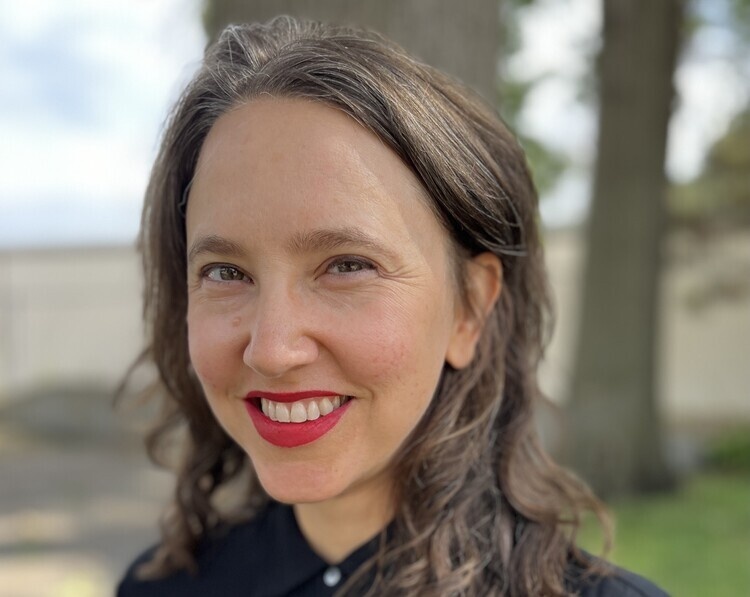
Speaker Bio:
Katie Anania is an historian of modern and contemporary art of the Americas. She is interested in art’s relationships to knowledge formation, particularly across queer and feminist lineages, as a way of relating differently to ecologies, or as an escape route out of colonial templates of technology and discovery. She is the author of Out of Paper: Drawing, Environment, and the Body in 1960s America (Yale, 2024), and co-editor of Early Modern Imaginaries: Art and the Usable Past (Routledge, forthcoming 2025). She is currently an associate professor of art history at the University of Nebraska-Lincoln. At UNL, she directs GLADE/s (Generative Lineages across Art, Data, and Environment/s), a consortium that uses curatorial practice and other community programming to expand public discussions about data visualization.